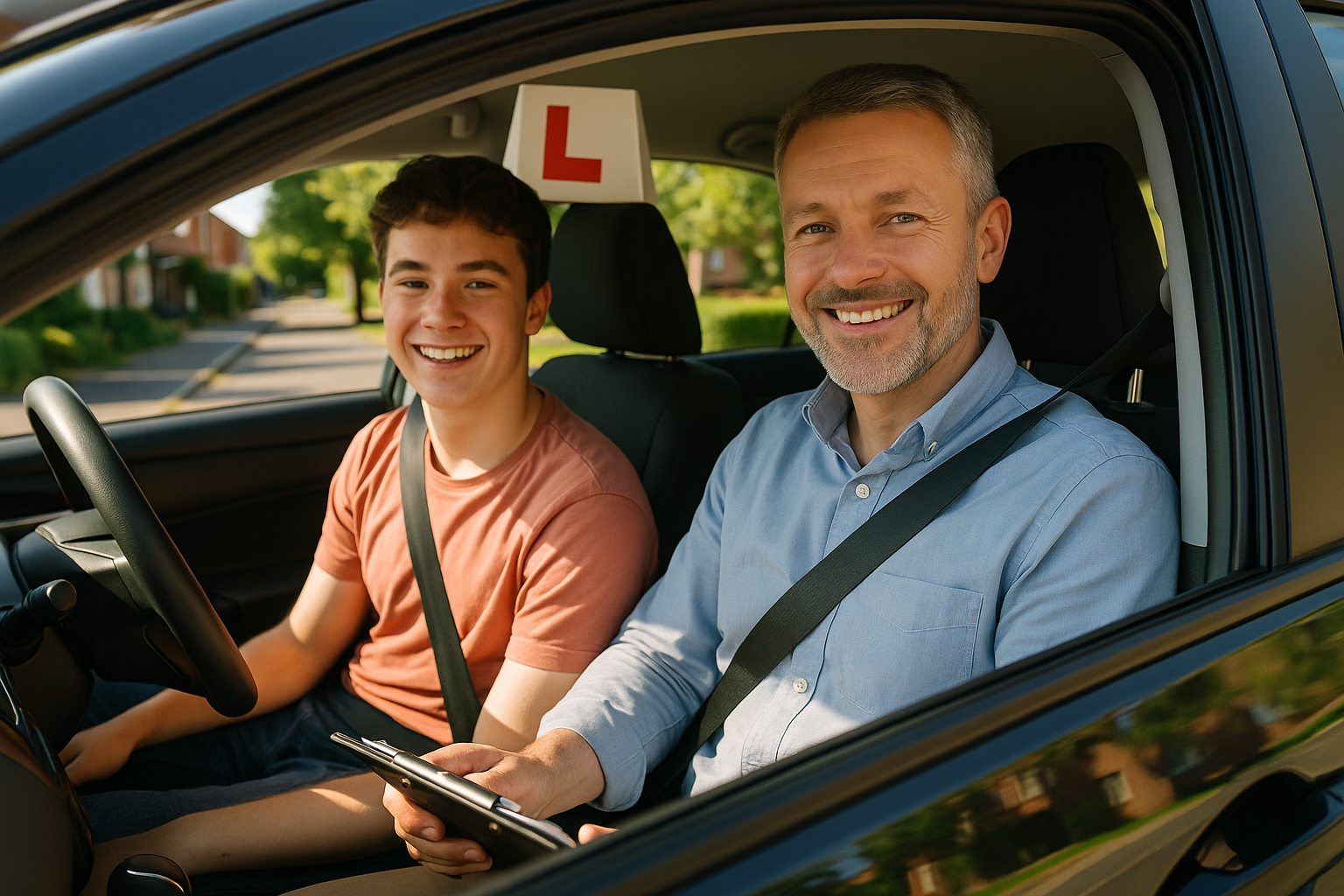
The Initial Greeting and Briefing
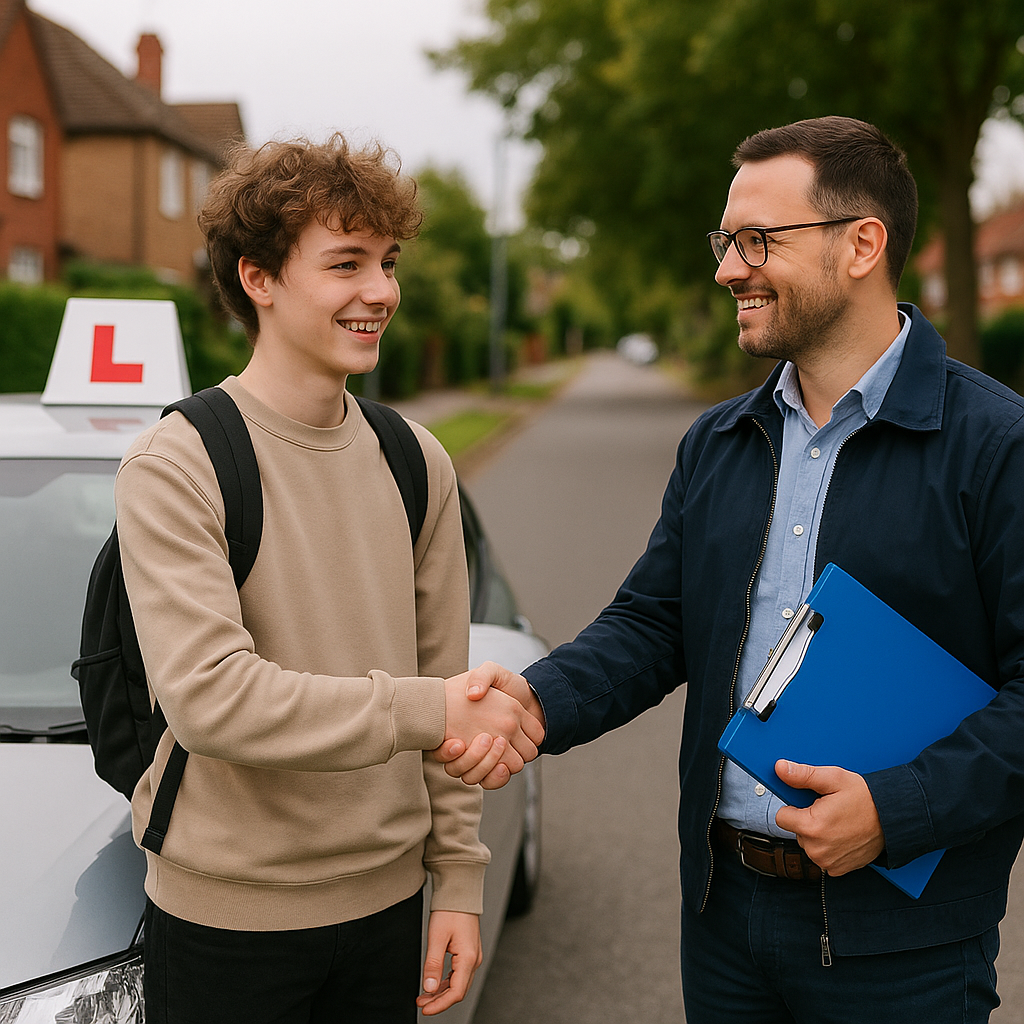
Your first driving lesson usually begins with a friendly introduction and an overview of what’s to come. It’s natural to feel nervous, but remember your driving instructor is there to help you. Expect them to ask about your previous driving experience, if any, and to explain the agenda for the lesson. They will likely assure you that it’s perfectly okay to start from square one.
Some instructors may take a moment to check any paperwork like your provisional driving licence, and confirm your eyesight meets the DVSA requirements. You might also discuss any specific goals you have regarding learning to drive.
The Cockpit Drill
Before you even start the engine, you’ll be introduced to the cockpit drill. This routine ensures that everything is set up correctly for you to start driving. Here’s what you’ll cover:
- D – Doors: Make sure all doors are properly closed.
- S – Seat: Adjust your seat so you can comfortably reach all the controls.
- S – Steering: Ensure the wheel is properly aligned and within comfortable reach.
- S – Seatbelt: Fasten your seatbelt securely.
- M – Mirrors: Adjust the rear-view and side mirrors for optimal visibility.
- P – Parking brake: Confirm that the parking brake is applied.
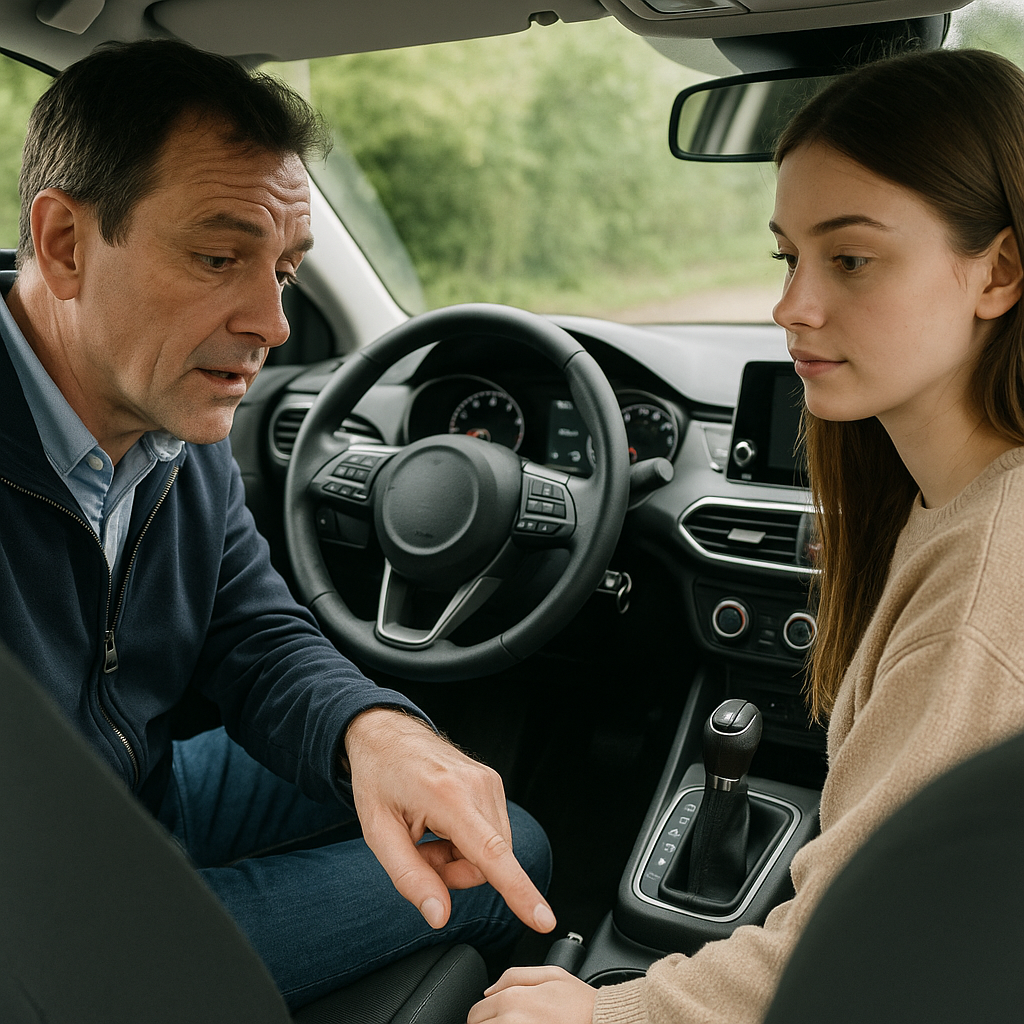
Your instructor will guide you through each step and answer any questions you might have.
Basic Car Controls
Once you’re settled in, your instructor will introduce you to the car’s basic controls. They might demonstrate how to adjust the seat and mirrors again, just to be thorough. Expect a walk-through of the pedals (clutch, accelerator, and brake in a manual car), the gear stick, and handbrake. Your instructor will also cover the key functions of the dashboard, including indicators and wiper controls.
It’s crucial to get familiar with these basics as they’ll become second nature in future lessons.
Moving Off and Stopping Safely
With the groundwork covered, you’ll move onto starting the car and setting off. Your instructor will guide you through how to:
- Start the ignition safely.
- Use the clutch and gear to move off.
- Steer the car while maintaining control.
- Change gears smoothly in a manual car.
Expect simple manoeuvres during your first go: driving in a straight line, making gentle turns, and stopping the car safely. Your instructor will walk you through each action step-by-step.
Throughout, it’s perfectly normal for your instructor to use the dual controls (additional pedals on their side of the car) to assist or intervene when necessary. Their main priority is to build your confidence while keeping you safe.
Frequently asked questions
What should I bring to my first driving lesson?
Bring your provisional driving licence and wear comfortable clothing that allows you to move freely. Don’t forget your glasses if you need them for driving.
How long is a typical first driving lesson?
Most first driving lessons last about an hour. This allows enough time for introductions, the cockpit drill, and some driving practice.
Will I drive on busy roads during my first lesson?
Usually, your first driving lesson will be conducted in a quiet area, like an empty car park or a calm residential street, to help you focus on learning the basic controls.
Am I allowed to make mistakes during the lesson?
Absolutely. Making mistakes is a normal part of learning to drive. Your instructor is there to help you learn and improve.
What if I’m nervous during my first lesson?
Feeling nervous is completely normal. Try to relax and communicate openly with your instructor—they’re experienced in helping new drivers feel comfortable.
Why does the car have dual controls?
Dual controls are there for your safety. They allow the instructor to take control of the car if necessary, which can be reassuring for nervous learners.
Start your journey with Vroomi
Find an approved instructor near you and track your progress to test day.
Explore for learners →